If you have half a day to spare while in Shanghai, take a day trip out to Zhujiajiao in the Qingpu district. This ancient water town is only an hour away from the city.
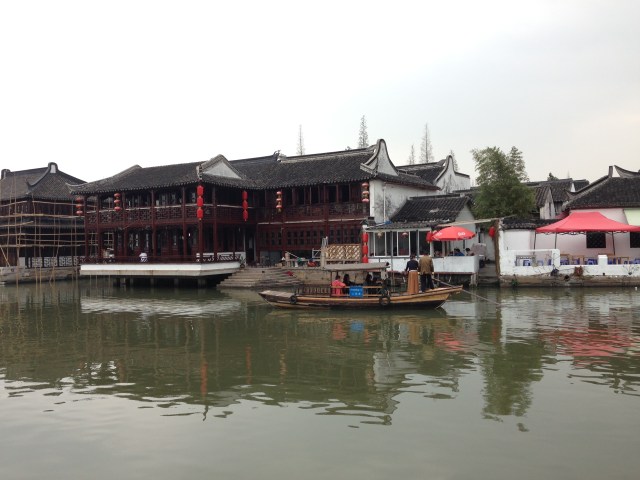 Continue reading
Tag Archives: temple
Tenryuji Temple (天龍寺)
Tenryuji is the most important zen temple of the Arashiyama district of Kyoto. Built in 1339 by shogun Ashikaga Takaui in honor of late Emperor Go-Daigo. It is now a UNESCO world heritage site.

Zen garden when you first walk into the temple.

Many of its original buildings were lost overtime to fire and wars. Its current buildings were rebuilt during the Meiji period. The original garden created by Muso Soseki, the first priest of Tenryuji, still stands today.

Overall, I didn’t find this temple to be impressive. Maybe because I saw too many temples and was tired of them at this point. I enjoyed the zen garden of Kodaiji Temple more.
Admission: 500 yen
Kinkakuji (The Golden Pavilion)
Formally known as Rokuon-ji Temple, but infamously known as Kinkakuji or the Golden Pavilion, this temple was built during the Muromachi period. It was previously the retirement villa of the third shogun Ashikaga Yoshimitsu but became a zen temple after his death.

Gold foil covers the top two levels of the temple while a phoenix sits atop the temple.

You are allowed to roam the rest of the temple grounds, however, there is not much to see.
Admission: 400 yen
(1 Kinkakujicho, Kita Ward, Kyoto, Kyoto Prefecture 603-8361Japan)
Kodaiji Temple
Kodaiji temple was my favorite temple on this trip. The zen qualities of the temple was soothing among the busy rhythm of this trip.

This temple was built in 1605 by Kita-no-Mandokoro, also known as Nene, in honor of her late husband Toyotomi Hideyoshi. However the temple is named after Kita-no-Mandokoro’s honorary name Kodai-in.

Peaceful zen stone garden in front of the main hall.

Kaisan-do, Founder’s Hall, with bonsai trees.

Hojo, main hall, rebuilt after being burned down in 1912.

Garyoro corridor, named after the resemblance to the back of a reclining dragon.

Mausoleum enshrining Toyotomi and Nene.

Shigure-tei teahouse constructed by bamboo and logs interwoven in a radiating pattern.

Next up on my house plans will be a bamboo forest.

Huge goddess statue.

Admission: 500 yen
 YUMTRAVELS