Navigating the World of Japanese Snacks

When I travel, my favorite souvenirs are food. Wherever I travel, I will no doubt come back with cases of snacks. I love to try snacks from different countries because what’s unusual in one country is the norm in a different country. Plus, it allows me to experience different flavor combinations I would never think to go together i.e. butter flavored chocolate.

I tried my best to taste all the snacks, amongst all the meals I ate, but it was a hard feat since there was such a large variety. Japan takes their snacks seriously. Chips, chocolates, and cookies in every flavor combination possible. And then there’s the matcha; it is not JUST matcha. There’s Uji matcha, sakura matcha, matcha with soybean powder, etc. It’s like snacks on steroids. The ones I didn’t have time to try, I brought home to savor. Below is a picture of all the snacks I bought.img_2590
Yes, I fit all the snacks above, 1.5 weeks of clothes, and a bottle of whiskey all in ONE carry on suitcase. I know I’m nuts, but I LOVE my snacks. Here is a breakdown of the snacks I think are worthy of trying:
Continue reading

Gott’s Roadside

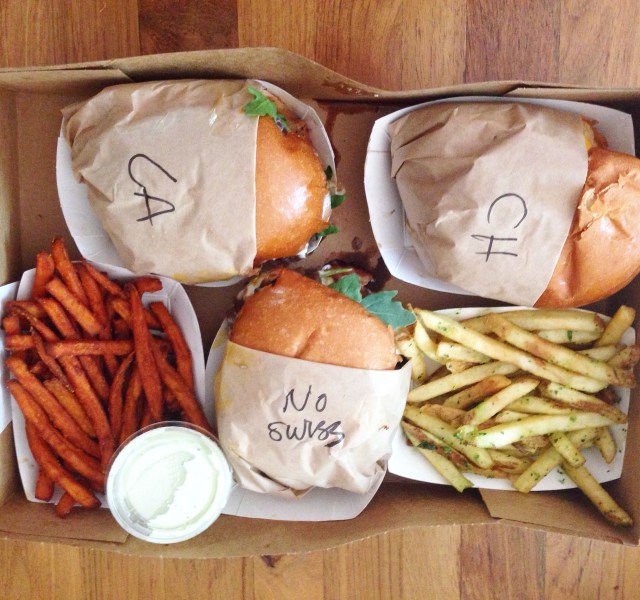
Now that summer is in full swing, I love spending my weekends wine tasting in Napa. My first stop before drinking commences is fueling up at Gott’s Roadside. The original is located off of the 29 in Saint Helena on the way to the wineries. However, they also have one in the heart of Napa, at the Ferry Building in San Francisco, and Palo Alto.IMG_2066
Continue reading

Shirohige’s Cream Puff Factory

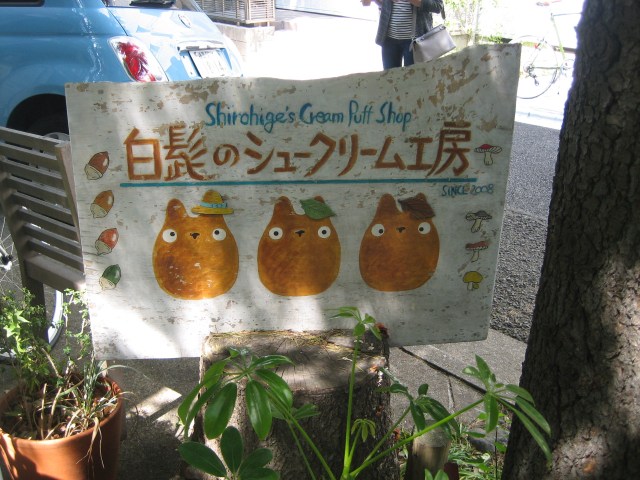
Studio Ghibli and My Neighbor Totoro fans can now fawn over Totoro cream puffs. Yes, a Totoro cream puff factory does indeed exist! It was opened in 2008 by Shirohige, also known as white bread in Japanese. Sources says this factory is also owned by the Miyazaki family. Hayao Miyazaki is the founder of Studio Ghibli and director of My Neighbor Totoro. Miyazaki also created a pig nosed animation of Shirohige, the baker.

image

This will also be the cutest place you visit. The inside is adorned with everything Totoro and Studio Ghibli. Even the bathroom has a Totoro smiling at you. Sadly, I forgot to take pictures.

You can buy your Totoro cream puffs downstairs if you choose to consume them later. If you choose to eat them there, there is a cafe upstairs. However, they do require each person to buy one drink minimum.

The flavors are seasonal and are indicated by the type of decoration Totoro adorns.

image

I got the strawberry cream (pink flower) and matcha green tea custard (yellow hat). My favorite was the strawberry cream because there were chunks of fresh strawberry in it.

image

Hello my neighbor Totoro! 🙂

image

The factory is located in Setagaya, about a 20 min train ride from Tokyo. When you get out the Setagaya station, make a right. Pass Lawson and make another right into the neighbor and follow the path until you reach Shirohige’s.

(5 Chome-3-1 Daita, Setagaya-ku, Tōkyō-to 155-0033, Japan)

Yamaga Honten (山家)

Izakaya is a popular informal Japanese cuisine for those looking to enjoy good food and drinks after work. Meat is cut into bite size pieces, placed on a skewer, and grilled. The type of meat can range from chicken to cow to parts like hearts, gizzards, and liver.

The food here is tasty but the menu is only in Japanese and the staff only speaks Japanese. So I trusted Google translate to decipher the menu. Boy, was I in for an cultural experience.

We ordered the kobe beef but didn’t realize it comes raw. We ate it anyways. 

image

The bacon wrapped asparagus were delicious.

image

We ordered a combo skewer set of chicken wings, chicken liver, chicken skin, chicken thigh, and chicken heart.

image

I enjoy eating chicken heart so I wanted another skewer of hearts. On the menu, it says chicken hearts (5). When I placed my extra order with the waiter, he asked if I wanted 5 and I said yes. I thought that it mean 5 hearts on a skewer. When the chicken hearts came out, I soon realized it meant 5 skewers of heart, which the waiter was trying to that explain to me.

image

On second thought, these look to big to be chicken hearts despite what google translates says. Either way, I forced myself to eat three skewers out of respect for my mistake. 

(1-5-9 Dogenzaka, Shibuya-ku, Tokyo)

patisserie Sadaharu Aoki

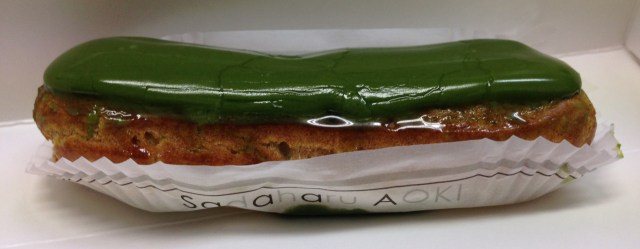
Despite having traveled to Paris before, I never heard of patisserie Sadaharu Aoki until now. Aoki was born in Tokyo but moved to Paris to learn the art of French baking. He opened his own shop in Paris before expanding in his homeland. I give him an A+++ for mastering French baking. Above is the matcha eclair incorporating the French pastry with his Japanese background. The eclair is filled with a matcha custard and topped with a matcha ganache. Aoki did a wonderful job in bringing out the true matcha flavor. It was so supremely divine that to this day, I still dream of having another bite.

Look out for it at the Shinjuku Isetan on level B1F.

The location I went to was Japan〒160-0022 Tokyo, Shinjuku 新宿3-14-1, but there are plenty of other locations in Tokyo. See the map below.

Mentsu-Dan (東京麵通团)

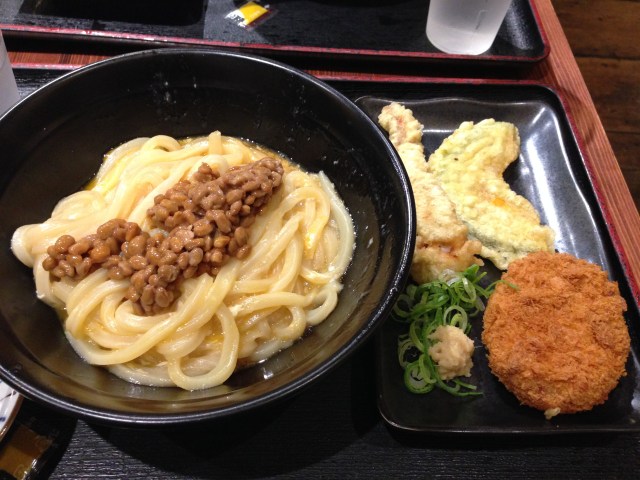
If you’re a noodle lover like me, I highly recommend Mentsu-Dan. The fresh handmade noodles will elevate your udon standards. The noodles are chewy and have the perfect bite. I haven’t been able to appreciate udon anywhere else after this. Being the tourist I am and willingness to try new things, I ordered natto with a fresh egg. I soon learned natto was fermented soy beans. I don’t recommend this unless you are a fan of fermented soy beans. It was difficult for me to overcome the fermented flavor despite how great the noodles were. I recommend the beef udon with broth instead. The beef is yummy, and the broth is clear and easy on the taste buds.

After you get your udon, head over to the tempura area where you can select from the vast varieties of tempura. I got the squash, katsu and squid. Overall, the freshness of the noodles makes this a must go when in Tokyo.

(7 Chome-9-15 Nishishinjuku, Shinjuku, Tokyo 160-0023, Japan)

Ichiran

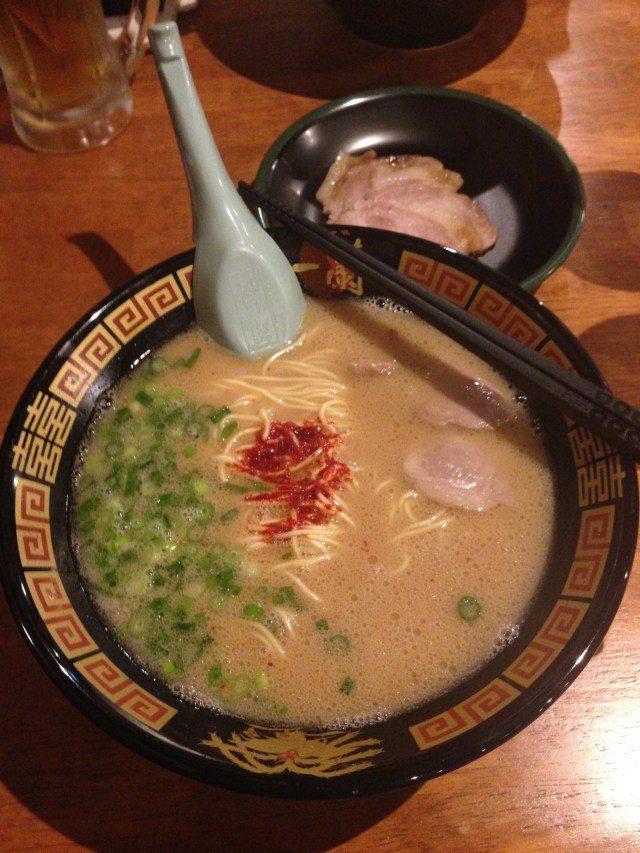
Like everything else in Japan, Ichiran is a chain restaurant. They specialize in ramen with tonkotsu broth. To order, buy your meal ticket at the vending machine. You have the option to add more pork, green onions or an egg for additional costs. Once you’ve purchased your meal ticket, the hosts will guide you to an open table. You have the option to sit at individual booth like eating area or at open tables. At the table, you fill out a form customizing your broth and noodle preferences. The broth was porky but not deep in flavor. The noodles were the perfect chewiness. One dislike was that they forgot our egg until I remembered at the end of meal. Overall, it was a satisfying bowl of ramen.

I went to this location Japan〒542-0084 Osaka Prefecture, Osaka, Chūō-ku, Souemonchō, 7中央区宗右衛門町7−18, however they have lots of locations through out Japan.

Hop Chou a la Creme in Shinsaibashi

Next to Dotonbori is Osaka’s shopping mecca Shinsaibashi. You can easily get lost in the never ending row of stores selling clothes, souvenirs, and jewelry. Beware of the hordes of tourists. I was expecting the tourists to be in Tokyo but soon learned they were all in Shinsaibashi.

image

Lured by the sweet fresh out of the oven smell of a cream puff, I stopped at the Hop Chou a la Creme stall for a chocolate cream puff filled with matcha custard. The shell was crispy and the matcha cream was sweet and delicious.

(3-12-3 Minamisenba, Chuo-ku, Osaka, Osaka Prefecture)

Aizuya

Aizuya is the birthplace of takoyaki. Tako means octopus and yaki means to fry or to cook in Japanese. Due to food shortages in the twentieth century, wheat flour was sent over to Japan by the US as a relief after World War II. It became more popular than rice, which wasn’t sustainable until recently. Endo Tomekichi used the flour to create choboyaki, bite sized balls of batter cooked in a special hemispherical grill. At the same time, in Akashi, akashiyaki was developed. It is a piece of octopus surrounded by loose, eggy batter and then is dipped in dashi, a clear fish broth. Tomekichi combined the two recipes and created takoyaki to be sold in his first takoyaki shop, Aizuya. Takoyaki is now one of the staples of Osaka. It is popular on the streets of Dotonbori. Japan’s Universal City Walk also includes a Takoyaki Museum for takoyaki lovers.

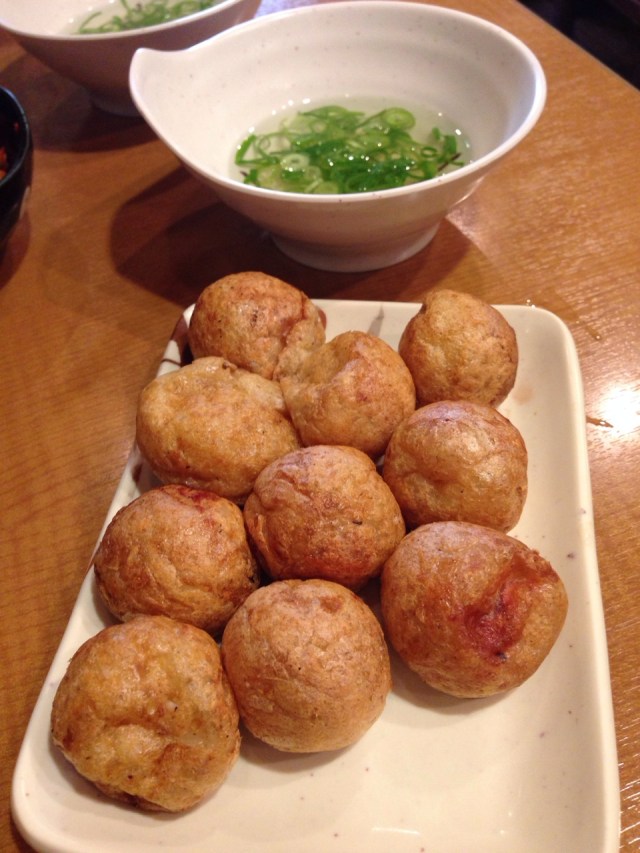
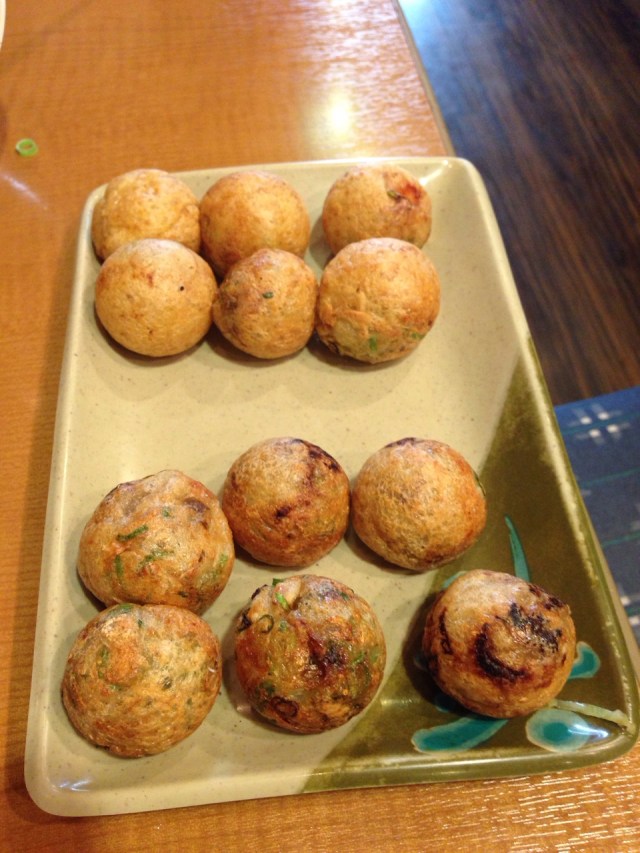
Below is the original takoyaki. The original recipe does not include sauces or toppings.

Below is a set of six made of takoyaki batter with green onions and another set of six made of meat and green onions.

Aizuya also sells akashiyaki but is sold as part of a meal set. All around Osaka, there are chains of Aizuya shops, even in metro stations. We traveled to the original location in Osaka, next to the Osaka JR station, only to realize there was a closer shop near the Namba station that we were staying close to.

Suntory Yamazaki Distillery

I was not a whisky drinker before I came to Suntory Yamazaki Distillery. In fact, I knew nothing about whisky except for it’s strong distasteful alcohol flavor. I wanted to broaden my alcohol palette to enjoy whisky the way my friends did, and I was able to accomplish that here.

image

Founded by Shinjiro Torri, Suntory Yamazaki Distillery is the birthplace of Japanese whisky. Since water is a key factor in determining the quality of whisky, Torri selected to build his empire in Yamazaki due to its exquisite natural spring water “Rikyu no Mizu.” It still bubbles today.

image

A glimpse of the thousands of bottles that make up the whiskey library.

image

After fermentation, the wash is distilled twice through the pot still (pictured below) to collect the new make, a highly alcohol concentrated clear, colorless malt whisky.

image

For my first ever whisky tasting, I tried the Hibiki 17, Yamazaki 18, and Hakushu 18. My friend taught me how to hold the whisky in my mouth, grind it with my teeth and enjoy the smokiness that exudes. I think I had too much fun doing this that at times I would choke on the intense smokiness. 

image

Hibiki is a blend of pure single malt whiskies aged in a variety of casks to create one single harmonious orchestra of flavors and aromas. Yamazaki is known to be Suntory’s flagship single malt, multi-layered with fruit and Mizunara, a very rare Japanese oak, aroma. Hakashu is the herbal and gently smoky single malt from the untouched Mt. Kaikomagatake of the Southern Japan Alps. 

Tastings ranging from $15-$40 dependent on the blend and age. Tip: Yamazaki is located in between Osaka and Kyoto. When you’re on your way to Kyoto from Osaka, just make a pit stop for some whisky.

(Japan, 〒618-0001 Osaka Prefecture, Mishima District, 島本町山崎5−2−1)